
September 2015

If there is one takeaway from yesterday’s panel on native advertising, it’s that sponsored content is not going anywhere in the foreseeable future.  Although NAD has talked about it before, the FTC has held a workshop to address it, and of course, we’ve blogged on it, native advertising is still a hot topic.  Native advertising, a form of sponsored content, is a fast-growing method for promoting products.

As explained by Diedre Sullivan, Senior Counsel to the New York Times Company, one of the threshold questions in sponsored content is whether the piece is, in fact, commercial speech.  Under the umbrella of sponsored content are a number of types of native advertising, such as content written and provided exclusively by the advertiser, versus content created by the publication with subjects of interest to the advertiser but without the advertiser’s direct input (branded content), or content written jointly by the advertiser and the publication (sponsored content).  If the content is exclusively editorial, it is afforded higher protection than commercial speech.  However, the question for advertisers is not generally whether the piece is an ad but instead how to disclose.Continue Reading A Conversation about Native Advertising, Editorial Integrity, and Brand Reputation
More, almost live blogging, from the NAD conference.  During the mid-morning hours yesterday, the conference group focused on strategies to get their claim substantiation right.  The panel of Kat Dunnigan (NAD); Rebecca Bliebaum (Tragon Corporation); Jay Goldring (Boots Retail USA, Inc); Spring C. Potoczak (Novartis Consumer Health, Inc.); and moderated by David Mallen (Loeb & Loeb, LLP) focused on the sufficiency of different types of claim substantiation.

The panel started the conversation by discussing how much substantiation is needed for a given claim.  In other words, what constitutes competent and reliable scientific evidence.  The panel said that randomized controlled trials (RCT) are generally thought of as the gold standard of support for advertising claims.  However, the panel noted that RCTs are not required in all cases.  In fact, David Mallen noted that the DC Circuit has said that RCTs are not necessarily the standard for advertising claim support.  The NAD confirmed that it does not require any one type of test, reiterating that its standards for claim substantiation are flexible.  RCTs are certainly accepted at NAD, but are not required.  The NAD’s focus is on whether the advertiser’s support is sufficient and reliable.  The NAD encouraged advertisers to simply provide the best evidence supporting the advertising claim, whether that evidence is a RCT or not.Continue Reading Getting Claim Substantiation Right

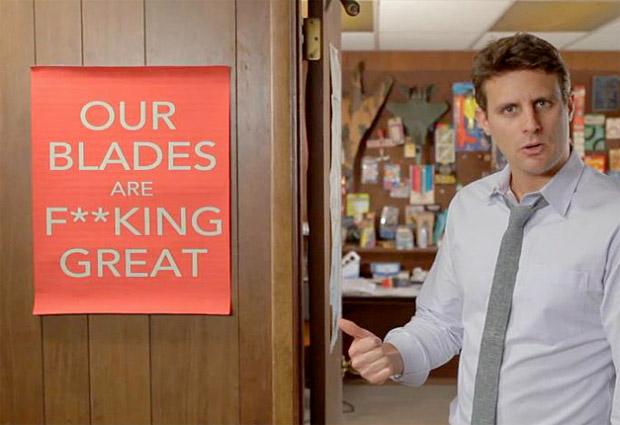
There is one phrase that sums up yesterday’s panel on puffery—puffery is f@#$*&% great.  The panel started with a bang by jumping right into a video advertisement for dollar shave club where CEO and panelist Michael Dubin informed the audience (and the world) that the blades offered by dollar shave club are not good, they are f@#$*&% great.  The panel’s energy did not stop there.

The panel dove into the age old question, how does one know when an advertising claim is a puff?  The starting place for the panel was of course black letter law.  The moderator, Terri Seligman from Frankfurt Kurnit, provided a thorough black letter definition of puffery—“an obviously exaggerated representation that is not objectively provable and that ordinary consumers would not rely upon in making a purchasing decision.”  The panel consisting of Michael Dubin (Dollar Shave Club); Gabriel Martinez (Clorox); Ndidi Oriji (NBC Universal); and Laura Brett (NAD), then gave their impressions of puffery—especially, what they consider NOT to be puffery.

The first observation is that if the claim is measurable, it is not puffery.  The panel discussed by way of example a Tropicana NAD case where Tropicana claimed its juice was the “World’s Best” juice.  The NAD found that this claim was puffery because “World’s Best” was a general, non-measurable claim of superiority.  The panel compared this case to a case where the claim “World’s Best Cat Litter” (Kent Nutrition Group, Inc. #5301) was challenged by Clorox.  The NAD held that the claim was not puffery because it was made in conjunction with multiple measurable claims (ends odor the best, lasts longer, clumps the best, as green as green can be, you can eat the cat litter because it’s made from corn, among others).  These claims are measurable and took what could have been a puffing claim and turned it into something that requires substantiation. The panel also noted that the advertiser did not participate in the NAD process in the Kent case and the advertiser was referred to the FTC, resulting in a closing letter.Continue Reading The Absolute Best Puffery Panel Ever!

In contrast to the Dollar Shave case we wrote about recently, NAD and NARB recently gave us an example of a case they found to be falsely disparaging, notwithstanding the humor and hyperbole throughout.

Everyone can agree that the DirecTV Rob Lowe ads (and their new series with Tony Romo) are hilarious.

https://www.youtube.com/watch?v=wl2uDi6Zju8

https://www.youtube.com/watch?v=dfavFFw194A

Rob Lowe is in all of his glory as a DirecTV subscriber. While an alternate reality version of Rob Lowe (e.g., creepy, painfully awkward, far less attractive, meathead, and scrawny arms) is a cable subscriber.
Continue Reading Humor and a Heartthrob Cannot Save the Day at NAD in False Disparagement Case

Well, not quite live.  This week we’ll be providing updates from the NAD Annual Conference, which kicked off today in New York.  The keynote address was given by  FTC Commissioner Julie Brill, who reminded the audience that while the advent of the internet age and social media has radically changed how advertisers market their

valleygirlThe FTC, in its finest Valspeak, said “Gag Me With a Spoon” to a marketer’s practice of trying to silence negative reviews through contractual provisions with customers.

As user reviews become more and more powerful in driving market share, regulators continue to pay attention.  In this recent action, the FTC filed suit against Florida-based marketers to stop allegedly misleading weight loss claims. What makes this FTC complaint stand out from other deceptive advertising actions, is a count that challenges, as an unfair practice, the use of consumer gag clauses to prohibit customers from writing negative online reviews about the company.

In its federal court complaint, the FTC alleged that Roca Labs and its principals sued and threatened to take legal action against consumers who wrote negative reviews about their experiences online or who complained to the Better Business Bureau. Roca Labs pursued such actions against consumers who purportedly violated certain non-disparagement provisions included in the “Terms and Conditions,” which consumers allegedly agreed to at the time of purchase. According to the FTC’s complaint, under the Terms purchasers agreed not to “speak, publish, cause to be published, print, review, blog, or otherwise write negatively about [Roca Labs], or its products or employees in any way. This encompasses all forms of media, and especially including the internet.” Purchasers who violated the Terms had 72 hours to retract the content in question, were required to pay the “full price” of the product (around $1580), and were subject to potential legal action for breach of contract by Roca Labs. 
Continue Reading FTC Goes After Marketer for Unfair Consumer Gag Clause

Executive_Order_imagePresident Obama appears to be taking a page out of the performance marketing handbook by signing an executive order promoting the use of behavioral science in federal government decision making and programs.  The New York Times ran an insightful opinion piece last weekend looking at President Obama’s endorsement of federal government agencies’ use of behavioral science insights.  Behavioral science is the study of insights into how people actually make decisions. ‎ Noted law professor and former head of the Office of Information and Regulatory Affairs in the Obama administration, Cass Sunstein noted that:

It’s one thing to make financial aid available to students, so they can attend college.  It’s another thing to design forms that students can actually fill out.

Building on impressive new findings from the White House’s Social and Behavioral Sciences Team, Mr. Obama ordered his government to use behavioral insights to simplify forms, cut wait times, eliminate administrative hurdles and reduce regulatory burdens.  A new report from the team, which has been up and running for more than a year, shows that small reforms can make a big difference.Continue Reading President Obama Encourages Use of Behavioral Science

The days of on-air fast-talking contest announcements are coming to an end.  Last Thursday, the FCC adopted revised rules that allow broadcasters to disclose contest rules on an Internet website, as opposed to reading them over the air.  Prior to this rule change, under the FCC’s “Contest Rule” (47 C.F.R. Section 73.1216), broadcasters that advertised a contest on-air were required to fully disclose the “material terms” of the contest and then conduct the contest substantially as announced or advertised – a requirement that was adopted almost four decades ago, and which the FCC now acknowledges is inconsistent with the way Americans obtain information today.

Those that want to take advantage of the new Internet website option must comply with the requirements that the FCC lays out in the Report and Order, including: 
Continue Reading Hear! Hear! FCC Modernizes Contest Rules for Broadcasters

By Boyd Amanda, U.S. Fish and Wildlife Service [Public domain], via Wikimedia Commons

No, PETA will not be in an uproar.  But if you certify Green claims or use someone else’s certification on your products you may want to continue reading.

In the past we have noted that third-party certifications and endorsements relating to environmental or “green” attributes are heavily scrutinized by the FTC as more “green” products continue to hit the market. Last year, we wrote about the FTC taking action against a plastic lumber marketer and a manufacturer for misleading advertising and marketing that claimed products to be made almost entirely out of recycled plastics. 
Continue Reading FTC Goes Seal Hunting: Issues Warning Letters About Green Seals

In yet another sign that the FTC is serious about enforcing its now not-so-new Testimonial and Endorsement guides, the agency just reached a settlement with Machinima over an influencers’ campaign designed to promote Microsoft’s Xbox One and several game titles for the console.  And, on a related note, if your company doesn’t already have policies in place for social media marketing campaigns, put this blog down now (well, close the screen) and start putting one together now.

So what’s a Machinima other than something that sounds like part of a Seinfeld episode?  Machinima involves the use of computer graphics to create a cinematic production.  See an example here:

https://www.youtube.com/watch?v=5e9__lfD6xYContinue Reading FTC and YouTube Channel Machinima Don’t See Eye to Eye