
sunshineThe coming of spring has been accompanied by good news for two food marketers—ConAgra and Bumble Bee Foods—in their respective court fights in California.

In the Northern District of California, a federal judge dismissed a putative class action against ConAgra alleging that the marketer’s Crunch N’ Munch product violated California’s unfair competition law since it contains partially hydrogenated oil (PHO), a food additive high in trans-fat. The complaint, filed by Tony Walker, specifically stated, “although safe, low-cost, and commercially acceptable alternatives to PHO exist, including those used in competing brands and even in other ConAgra products, ConAgra unfairly elects not to use safe alternatives in Crunch ‘n Munch in order to increase its profits at the expense of the health of consumers.”Continue Reading Springtime for Food Marketers? Two Big Wins in California in Recent Days

orange splashWhich foods deserve to be labeled as “healthy?” The FDA considered this question at a public meeting on March 9th.

This public meeting was the latest stop on the FDA’s journey to redefine the term “healthy” in food labeling. The journey started almost 2 years ago in March 2015 when KIND received a warning letter from the FDA stating that many of its products labeled “healthy” were misbranded. KIND’s products, of which nuts are a primary ingredient, exceeded the “low saturated fat” threshold required to make the nutrient content claim “healthy” under FDA regulations.Continue Reading Process to Redefine “Healthy” Moves Forward with FDA Public Meeting

jellyfishHave you seen an ad like this (we have, more times than we can remember): “Ever walk into a room and forget why? Spend extra time looking for your car keys or purse? Have trouble remembering names or faces?”

If the answer is yes, the dietary supplement Prevagen may be just what the doctor ordered.

That’s because Prevagen contains the active ingredient apoaequorin, a dietary protein originally derived from a species of jellyfish living in the Puget Sound. (Don’t worry—no jellyfish are harmed in the making of Prevagen.) According to Prevagen’s marketers, this dietary protein can help reduce common memory problems—now you remember where you put those car keys—that we begin to encounter all too often as we age.

Or maybe not.Continue Reading FTC, New York AG File Complaint Against Marketers of Dietary Supplement Prevagen

Last week, the Southern District of New York dismissed with prejudice a putative consumer class action alleging that containers for Muscle Milk protein powder violated New York consumer protection laws because they were approximately one-third empty at the time of purchase. More specifically, the plaintiff’s Amended Complaint contended that “Defendant CytoSport, Inc. intentionally packaged its Muscle Milk powder products . . . in large, opaque containers that contain approximately 30% or more of empty space” and that “[c]onsumers, in reliance on the size of the containers, paid a premium price for [the products] which they would not have purchased had they known the containers were substantially empty.”

This case involves a challenge to what is known in the legal vernacular as food container “slack-fill,” which is the empty space in a food product container (usually the space between the food itself and the container’s opening; think of a bag of potato chips). More technically, the FDA defines slack-fill as “the difference between the actual capacity of the container and the volume of the product contained therein.” Under the federal Food, Drug and Cosmetic Act (FDCA) and FDA regulations implemented thereunder, a food product is considered misbranded “[i]f its container is so made, formed or filled as to be misleading.” Similarly, a container is misleading under FDA regulations if its contents cannot be fully viewed and it contains “nonfunctional slack fill.” So unless you are using clear plastic packaging or some other form of packaging where consumers can easily see exactly how much is inside, you need to look at how much slack-fill is present and why.Continue Reading Slack-Fill Consumer Class Action Challenge Not Enough Muscle to Survive

sunblockAt last year’s Kennedy Center Honors, Aretha Franklin brought down the house and brought President Obama to tears with her rendition of Natural Woman. Marketers relying on “all natural” claims also may feel like crying these days. We’ve blogged frequently about natural claims; see this recent post. Much of the misery in this area results from confusion over the use of the term “natural” in food. The Food and Drug Administration (FDA) has requested public comments on the use of the term, issued rather circular non-binding guidance, but thus far not issued regulations. The Federal Trade Commission (FTC) also has refused to issue guidance regarding natural claims. All of this confusion, however, will not stop the FTC from going after marketers making “all natural” claims that the FTC deems deceptive. In April, we discussed the FTC suing several marketers of sun screen and beauty products for deceptive all natural claims based on the presence of synthetic ingredients in the products. Four of those companies choose to settle, one choose to fight the FTC on the FTC’s home court — administrative litigation. Anyone want to guess how that turned out?

On December 12th, the FTC announced that it had granted summary decision in staff’s favor against California Naturel, Inc. The personal care products sold by California Naturel include an “all natural” sunscreen with SPF 30, which California Naturel described on its website as containing “only the purest, most luxurious and effective ingredients found in nature.” California Naturel conceded that its “all natural” sunscreen actually contained the synthetic ingredient dimethicone—making up 8% of the sunscreen formula. The FTC found that was sufficient to find the “all natural” claim deceptive in violation of Sections 5 and 12 of the FTC Act.Continue Reading The FTC Weighs in Further on All Natural Claims

orange splashWhen courts decide to stay actions to await FDA guidance in an area, it’s only natural that our ears perk up. Which has been going on a lot, with cases such as Kane v. Chobani and Swearingen v. Santa Cruz Natural, Inc.

Last week, however, the Ninth Circuit Court of Appeals, which had previously opted to wait for FDA guidance with respect to evaporated cane juice, decided there was no need to wait for FDA to provide further guidance on “natural” claims in Brazil vs. Dole. In 2013, the lower court had granted in part, and denied in part, Dole’s motion to dismiss or strike the first amended complaint. (More about the significance of the 2013 date below.) The Ninth Circuit found that a decision not to stay or dismiss the case under the doctrine of primary jurisdiction was not an abuse of discretion.Continue Reading Ninth Circuit Decides Not To Stay Natural Case, But Read the Fine Print

brown and white sugar

Earlier this year, we discussed the Ninth Circuit’s decision staying a consumer class action against Chobani challenging its listing of “evaporated cane juice” as an ingredient on its yogurt labels. According to the plaintiffs in that case, “evaporated cane juice” was simply code for sugar, and Chobani therefore allegedly misled them about the healthiness of its products. The Ninth Circuit reasoned that a stay was necessary on primary jurisdiction grounds in order to allow the FDA time to complete its review of draft guidance on the use of the term. This decision was viewed as a temporary breather for food companies facing class actions challenging the use of the term. The Northern District of California’s recent decision in Swearingen v. Santa Cruz Natural, Inc., issued after the FDA published its final guidance, may signal a revival of such cases.Continue Reading Class Action Labeling Claims Partially Evaporated, But What’s Left May Signal a Revival of “Evaporated Cane Juice” Claims

By Jaidan899 (Own work) [CC BY-SA 4.0], via Wikimedia Commons

FDA finalizes rule to revise Nutrition Facts panels for foods and Supplement Facts panels for Dietary Supplements

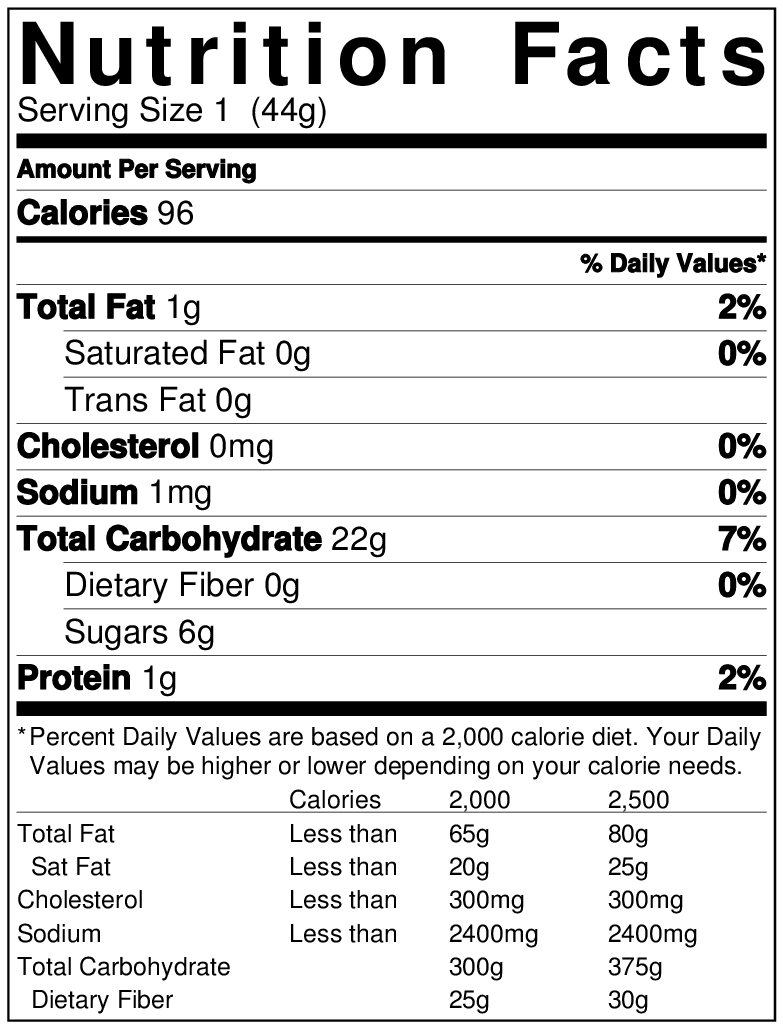
On May 20, 2016, the U.S. Food and Drug Administration (FDA or the Agency) issued a final rule (Rule) that overhauls the design and content of nutrition labeling for foods and dietary supplements (known as the Nutrition Facts label for packaged foods and the Supplement Facts label for dietary supplements). These changes are largely consistent with those proposed by the Agency in 2014.
Continue Reading Major Changes Coming to Nutrition Facts and Supplement Facts Labels Near You

By Miansari66 (Own work) [Public domain], via Wikimedia Commons

The U.S. Food and Drug Administration announced this week that Kind LLC may label its snack bars as “healthy,” sort of. In 2015, the FDA warned Kind that several of its products were misbranded as “healthy,” and that such labeling falsely claimed that the snacks were low-fat or rich in anti-oxidants, among other things. The FDA’s letter to Kind threatened regulatory action if this and other alleged violations were not corrected. However, the FDA recently rescinded this demand and is now permitting Kind to label its snack bars “healthy,” so long as it is clearly part of the company’s philosophy and not part of a nutritional statement.

According to the Wall Street Journal, the FDA is also planning on re-evaluating its regulations concerning nutrient content claims, and plans to ask the public for comment on what should constitute the modern definition of “healthy” to match up to the current recommendations about health and eating habits.Continue Reading FDA Reverses Stance on Kind Snack Bar Labels and Re-Evaluates Its “Healthy” Standard

By m01229 from USA [CC BY 2.0], via Wikimedia Commons

While the Food and Drug Administration (FDA) is still considering whether to issue guidance over the use of the term “natural” in food products, the Federal Trade Commission (FTC) is steamrolling ahead this week with a flurry of settlements and a complaint over deceptive use of the terms “all natural” and “100% natural” in the advertising of sunscreens, shampoos, and other styling/beauty products. However, while there have been vigorous debates in the courts and elsewhere over whether natural ingredients must be non-GMO, and whether certain highly processed natural ingredients such as high fructose corn syrup qualify as “natural,” the FTC’s cases went after some low-hanging, not very natural, fruit. The FTC’s four proposed settlements and new administrative complaint over the use of the phrase “all natural” all involved products that appear to contain clearly synthetic ingredients. (In this regard the FTC’s actions parallel the warning letter FDA issued to Alexis Foods and their frozen potato product.)

The four proposed settlements are with Trans-India Products, Erickson Marketing Group, ABS Consumer Products, and Beyond Coastal.Continue Reading It’s Not Nice to Fool Mother Nature: FTC Takes Aim at “All Natural” Claims