turf toeWhen I think of Astroturf this time of year I think of football. That probably isn’t true for the New York AG’s office, which has continued its assault on the posting of fake reviews, also known as “astroturfing.” Earlier this month the NY AG announced two more enforcement actions against an urgent medical care facility and a car service. The two actions and the difference in their business models demonstrate that this issue is not going away and that any business type that uses online reviews to help market its product can be at risk. See these prior posts on the AG’s efforts: AG rips up Astroturf; and NY AG targets deceptive endorsements.

According to the AG, the urgent care provider Medrite paid Internet advertising teams thousands of dollars to post favorable reviews on Yelp, CitySearch, Yahoo Local Page, and Google Plus. Medrite also hired freelancers through Craigslist and other sources to post favorable reviews. Medrite did not require that the reviewers actually visit its clinics or that the reviewers disclose that the reviewers were being compensated for their reviews. Both are big no nos in using reviews to market your product.

Continue Reading NY AG Keeps up the Pressure on Astroturfing

medical appsAs 2017 quickly approaches, and consumers look for gift ideas or help with their New Year’s resolutions, “apps” that focus on fitness and health are increasingly popular. A recent FTC settlement against Aura Labs, Inc. (“Aura Labs” or “Aura”) and its principal, for allegedly making deceptive claims regarding the accuracy of its blood pressure measuring app, confirms that the same advertising rules apply to claims made for an app as for “hard goods.”

Aura Labs sold the “Instant Blood Pressure App,” a mobile device software application that uses mathematical algorithms, mobile device measurements, and consumer inputs (gender, birthdate, height, and weight) for the purported purpose of blood pressure measurement. The app was available for purchase and download through the Apple App Store or the Google Play marketplace for $3.99 or $4.99.

Continue Reading Deceptive Claims for Health App and Endorsements by Employees Raise FTC’s Blood Pressure

financial lawState attorneys general have become increasingly involved in consumer financial services investigations and enforcement, a trend that is expected to continue into the next presidential administration. Whether involving a single state attorney general or multiple attorneys general, investigations and litigation can lead to high costs, administrative burdens, distractions, and reputation damage. Often there may be parallel investigations by federal agencies, and risks and exposure from private litigation.

On Friday, December 9, 2016 at 3 – 4 pm ET, lawyers from Venable will present a webinar (with CLE*) on the “Present and Future Role of State Attorneys General in Consumer Financial Services Regulation and Enforcement.”

Continue Reading What Advertisers of Consumer Financial Services Need to Know About State Attorneys General – a Venable hosted Webinar

call centerThe FCC was busy in November.  On November 18, the FCC posted an Enforcement Advisory on robotexting and consumer protection, and on November 21 published a blog on robocalls.  The FCC notes that the Advisory was issued to promote understanding of the clear limitations on the use of autodialed text messages, often referred to as “robotexts.”

The Advisory reminds us that the FCC’s TCPA rules apply to text messages as well as pre-recorded calls, and reiterates that “prior express written consent” is required for autodialed texts that include or introduce an advertisement, whereas “prior express consent” is required for messages that are not commercial in nature.

Continue Reading FCC Posts Enforcement Advisory Alerting Businesses of TCPA Text Messaging Rules

gift boxThere’s been a lot of talk about the one eensy weensy Supreme Court vacancy, but nary a word about the not one but TWO FTC vacancies. Indeed, if any of you were out and about recently, say at the theater perhaps, you might have been sitting near a future FTC Commissioner. So, let’s imagine for a second that we were talented enough to appear in the theater (ok, truth be told, Amy is, but that’s a blog for another day) and that all of you are wealthy enough to be able to afford Hamilton tickets and sit among possible future FTC appointees. What would we say to all of you about the possible future direction of the FTC? What might be on a new administration’s wish list? We’ll explore these questions in a few upcoming blogs. We’d love to hear your thoughts as well.

Continue Reading All We Want for the New FTC is . . .

In case you were like Alabama football coach Nick Saban and unware, there was an election last week. One post-election issue has been the use of “fake news” to try and sway voters and possible steps to prevent those types of stories going forward. The FTC has been trying to stop “fake news” advertising for some time; see our earlier posts on the Lean Spa case, Lord & Taylor case, and Native Advertising Statement. Earlier this month, a court affirmed those efforts. The case provides a list of lessons on what not to do when advertising your products.

The FTC sued a company called Pure Green Coffee and others in 2014 alleging that they violated the FTC Act by making unsubstantiated and false weight loss claims and through the use of deceptive advertorials and testimonials in the sale of Green Coffee Weight Loss products. Apparently, the defendants entered the business after having seen an excerpt of the Dr. Oz Show touting the effects of Green Coffee Extract. The company’s advertising made claims that the product could cause dramatic weight loss including: 17 lbs. in 22 weeks; 17 lbs. in 12 weeks, 16% of body fat in 22 weeks, 20 lbs. in four weeks, and 1-2 inches of belly fat in one month.

In 2015, most of the defendants settled for judgments in the amount of $30 million, with almost all of that suspended based on the inability to pay. One defendant, Nick Congleton, chose to fight. In early November, the court entered summary judgment against him for $29 million, a HUGE amount.

Continue Reading FTC and Courts Remain Real Serious About Fake News Advertising

Donald Trump Rubiks CubeSince the election, several questions have emerged about the near future of the consumer financial services federal regulatory landscape. We’ve gathered some of the most common questions below. The FAQs, based on input received from members of our consumer financial services team, are intended to help provide basic information to help place the results into perspective.

Who will President Trump be listening to as he develops his consumer financial services policies?

It is difficult to predict how a Trump administration will proceed specifically with policy issues regarding consumer financial services. While these issues did not play a significant role in the debates or the campaign discussions, we know that the challenges facing the industry have been front and center for Congress.

In the short term, we expect a Trump administration to be influenced by the legislative efforts to date of the House Financial Services Committee (expected to be led by Chairman Jeb Hensarling) and Senate Banking Committee (expected to be led by Senator Mike Crapo).

Continue Reading Post-Election Consumer Financial Services Regulatory Landscape FAQs

When the Federal Trade Commission (FTC) investigates a case, it looks at it from the first contact the consumer has with a product or service through the end of the consumer experience. For many consumers, the first contact with a product comes through lead generation, where a “lead generator” tries to find consumers interested in a particular type of good or service and then sell those leads to marketers. The FTC released its staff perspective paper on lead generation in September. Demonstrating that the FTC’s interest in lead generation is not just academic, the FTC recently asked the Department of Justice to file a complaint on the FTC’s behalf against a collection of entities known as the Consumer Education Group, charging them with violating the Telemarketing Sales Rule. The complaint alleged that the Defendants made illegal outbound telemarketing calls — some using robocalls delivering prerecorded messages — to consumers on the national Do Not Call (DNC) Registry without consumers’ express written consent or a preexisting business relationship.

Continue Reading FTC Complaint Confirms Interest in Lead Generation

water glassIt has been almost a decade since a water-drinking contest held by an Entercom’s Sacramento radio station resulted in the death of a contestant, but the Federal Communications Commission (FCC) has a long memory.  Last week, the FCC issued a Hearing Designation Order (it can be found here) to determine whether the license held by Entercom – one of the largest station owners in the country – should not be renewed based on new information about the “Hold Your Wee for a Wii” contest.

The 2007 contest challenged participants to compete for a prize by drinking water at regular intervals. To win, a contestant would have to be “the last one standing” (or holding it) – the competitor could not use the bathroom until the competition was over.  The radio station at no point, either before or during the contest, announced the risks associated with the contest in general or water intoxication.  Ultimately, the contest led to the fatal water intoxication of contestant Jennifer L. Strange.  Civil claims for wrongful death were filed against the radio station, which was ultimately found to have been negligent.

Continue Reading Water Drinking Contest Causes Waves at the FCC, Potentially Sinking the Promoter

Among other things (National Pizza Month, anyone?), October was Breast Cancer Awareness Month and the Washington Post recently published an interesting article about the connection between retail apparel marketing and breast cancer awareness efforts. The combination of the two – “pink marketing” – is as ubiquitous during the month of October as Halloween candy and pumpkin-spiced lattes.

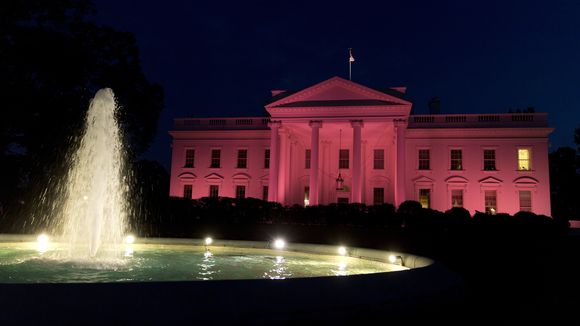
White House Goes PinkOver time, cancer charities have sought to increase donor awareness of their mission and boost fundraising by partnering with for-profit corporations. This cause-related marketing can be mutually beneficial: the charity is helped by the company’s marketing budget and public relations heft, while the company enhances its goodwill with customers (indeed, some research supports the notion of a “halo effect” for retailers that consumers believe are socially conscious). Thus, we see successful partnerships like the one featured in the Washington Post article between the National Football League and the American Cancer Society, or relationships between World Wrestling Entertainment and Susan G. Komen. In October, hulking athletes incorporate pink into their uniforms and leap from pink wrestling ropes. Celebrities wear pink ribbons and retailers offer pink-colored versions of their products. Even the White House goes pink.

Continue Reading Don’t Let “Pink” Marketing Lead to Others Seeing Red